1st American Plumbing, Heating & Air
Tankless Water Heater Repair & Installation in Salt Lake County

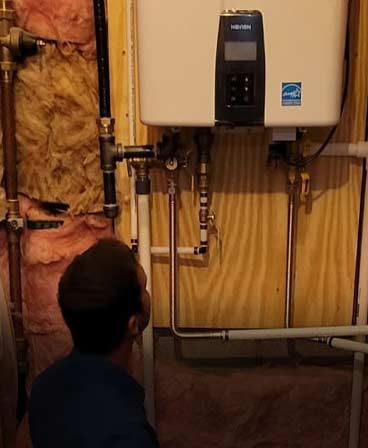
Getting cold water halfway through a shower? Seeing an error code on your tankless unit? Let us find out what’s causing the problem and explain how to fix it.
At 1st American Plumbing, Heating & Air, we provide tankless water heater repair for Salt Lake County homeowners and help them decide whether a new system makes sense for their home. You can also count on us for maintenance that keeps your existing unit working as it should.

Tankless Water Heater Repair
A tankless water heater shouldn’t need constant resets to get you through the day. If yours keeps shutting off or struggles to maintain the temperature, it’s time to have it checked.
Some problems come from mineral buildup. Others involve a failed component or an issue with the installation. Our plumbers diagnose the cause before recommending a repair. We explain what we find and provide pricing before work begins.
Schedule service if you notice:
- Water that turns cold while you’re using it.
- An error code that keeps coming back.
- Little or no hot water at your fixtures.
- Leaking around the unit or its connections.
- New noises during operation.
- A system that repeatedly shuts down.
An error code gives us a starting point, but it doesn’t tell the whole story. We check the system to determine whether it needs maintenance, a component repair or further troubleshooting.
Keep Mineral Buildup From Becoming a Bigger Problem
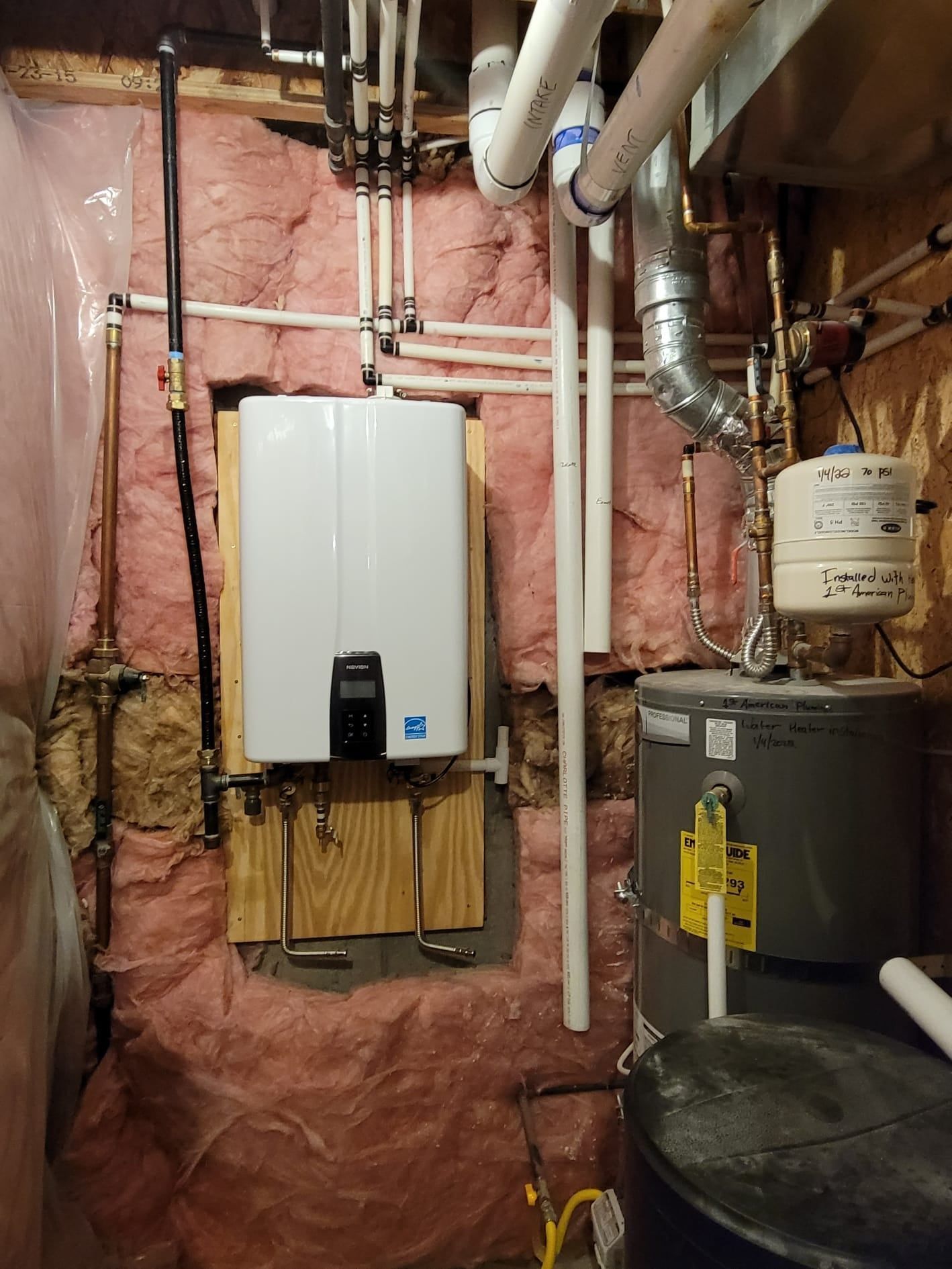
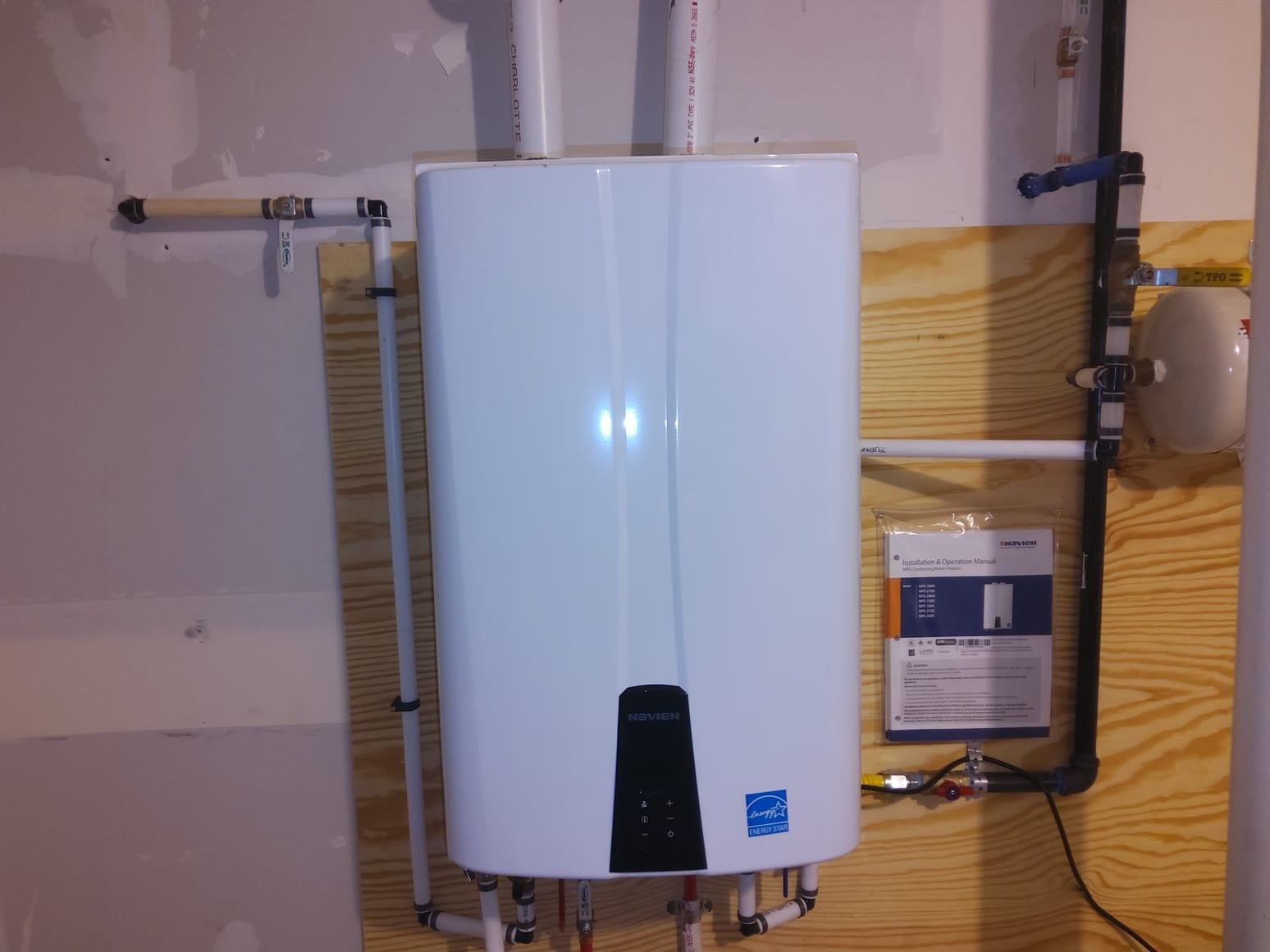
Tankless systems heat water as it passes through a heat exchanger. Over time, minerals in hard water can build up inside that passage and affect performance. Flushing removes that buildup. During maintenance, we also check for leaks and inspect the connections. For gas units, checking the venting is another part of the visit.
The right service schedule depends on your model and the water moving through it. If you don’t know when your system was last serviced, we can help you determine what it needs.
Water treatment may also be worth discussing if scale keeps returning. It can help manage the conditions causing buildup, but it doesn’t replace the maintenance your manufacturer recommends.
Is Tankless a Good Fit for Your Home?
Tankless water heaters heat water on demand instead of keeping a tank of water hot. That can offer advantages, but the system still needs to match how your household uses hot water.
What You May Like About Tankless
- Longer hot-water use: A properly sized unit can keep heating water without waiting for a storage tank to refill.
- A smaller footprint: Many units mount on the wall and take up less room than a conventional tank.
- Less standby heat loss: There’s no large tank of hot water cooling between uses.
What to Consider Before Switching
- Capacity has limits: Running several showers at once can exceed the unit’s output.
- Installation may require upgrades: The existing gas supply or electrical service may need changes. Gas models also have specific venting requirements.
- Hot water still takes time to reach the faucet: Tankless doesn’t automatically eliminate the wait caused by water sitting in your pipes.
- Maintenance is part of ownership: Mineral buildup needs attention, especially where water is hard.
We’ll help you weigh those tradeoffs against your household’s needs and the cost of installation.
Prefer a conventional tank or want to compare both options? Visit our
Water Heater Repair & Install page.
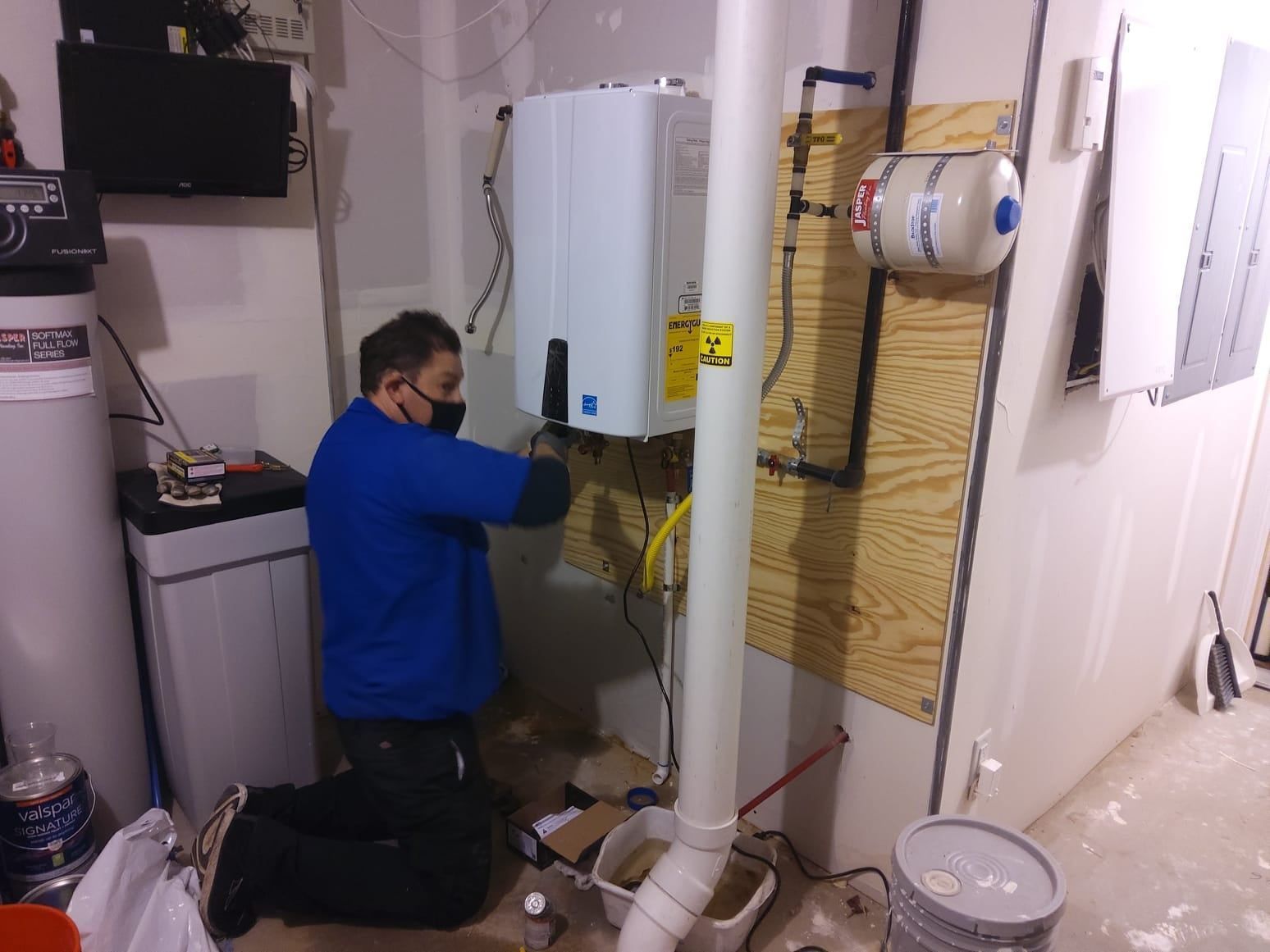
Tankless Water Heater Installation
Choosing a tankless system starts with how much hot water your home needs at one time. The number of bathrooms alone doesn’t give us the full picture.
We look at which fixtures you use together and how much the unit needs to raise the incoming water temperature. Colder incoming water requires more heating, which affects the amount of hot water a unit can deliver.
Before recommending a system, we evaluate:
- Your household’s demand: Whether showers overlap with other hot-water use.
- The available energy supply: Whether the home can support the recommended unit.
- The installation location: Where the unit can be mounted and serviced.
- Venting and drainage needs: What the selected model requires.
- The full project cost: The unit and installation work, including necessary changes to the existing setup.
Our installation estimates account for the work needed in your home, so you can make a decision with a clear understanding of the project.
Should You Repair or Replace Your Tankless System?
A problem with your tankless water heater doesn’t automatically mean you need a new one. Maintenance or a replaceable part may resolve the issue.
Replacement may make more sense when an older unit needs a major repair or has become unreliable. We also consider whether parts are available and whether the system can meet your household’s demand.
If the trouble began when your household’s hot-water use increased, we’ll look at sizing before recommending another unit. Replacing a system with the same capacity may leave you with the same problem.
We’ll explain the repair option and discuss replacement when it’s worth considering.
Local Help for Your Tankless Water Heater
We provide tankless water heater repair in South Jordan and serve homeowners in Herriman and Midvale. Our team also handles tankless installation and ongoing maintenance throughout these communities.
Whether your current unit needs attention or you’re planning a switch to tankless, we’ll help you understand the next step.
Need help elsewhere in your home? Explore our
plumbing services.
Tankless Water Heater FAQs
How long do tankless water heaters last?
Many tankless water heaters have an expected lifespan of around 20 years. Actual service life depends on the model and its operating conditions. Regular maintenance and water quality also affect how long it lasts.
Can a tankless water heater be repaired?
Yes. Many tankless problems can be addressed through maintenance or component repairs. We’ll inspect the unit and explain whether repair is practical based on its condition and the cost of the work.
Yes. Many tankless problems can be addressed through maintenance or component repairs. We’ll inspect the unit and explain whether repair is practical based on its condition and the cost of the work.
An annual service visit is a useful starting point, but follow your manufacturer’s requirements. Hard water or heavy use may call for more frequent flushing. We can help you establish a schedule for your system.
Is a tankless water heater right for my home?
It may be, provided the unit can meet your hot-water demand and your home can support the installation. We’ll evaluate the setup and explain the costs before you decide. Tankless is an option worth considering, but it isn’t the best choice for every household.
Why does my tankless water heater turn cold during a shower?
The system may be struggling with mineral buildup or a component problem. It can also turn cold when demand exceeds its capacity or water flow falls below the level needed to activate heating. A service visit can help determine what’s happening.
Other Services We Offer
(Full List of Home & Commercial Solutions)
We are a full-service plumbing and HVAC provider, offering expert solutions across all your home and commercial comfort needs.


Client Testimonials: Tankless Comfort and Efficiency
Location Services
Other Areas We Serve
We provide professional tankless water heater service to all major communities across the Wasatch Front:
Let’s Get Your Hot Water Working Right
You shouldn’t have to work around a tankless water heater that keeps letting you down. Tell us what’s happening, and we’ll help you find a solution.
Considering a new system? We’ll start by checking what your home needs and walk you through the installation options.